Category: Computing

Search
Cloud computing glossary

The most common terms in cloud computing

In this post we want to collect the most common terms in cloud computing; from basic concepts such as the main cloud service models and types of cloud to more specialized concepts related to cloud computing. Let’s start from the beginning… What is cloud computing? Cloud computing is a computing resources and services distribution model

READ MORE
What is a bare-metal server? Features and advantages

What is a bare-metal server?

A bare-metal server is a physical server with a single tenant. That is to say, a physical server of exclusive use of the client who rents it, which is not shared with other organizations or users. Together with virtual servers, networking and storage, bare-metal servers are an essential part of the IaaS cloud service model.

READ MORE
On-premise vs hosted private cloud comparison

On-premise vs hosted private cloud

As private cloud solutions continue to gain in popularity, the question “on-premise vs hosted private cloud” arises. Companies are looking into the private cloud as an infrastructure solution that offers a balance between the functionalities and scalability of cloud services and the security, control and robustness of traditional IT infrastructures. Both deployment models have points

READ MORE
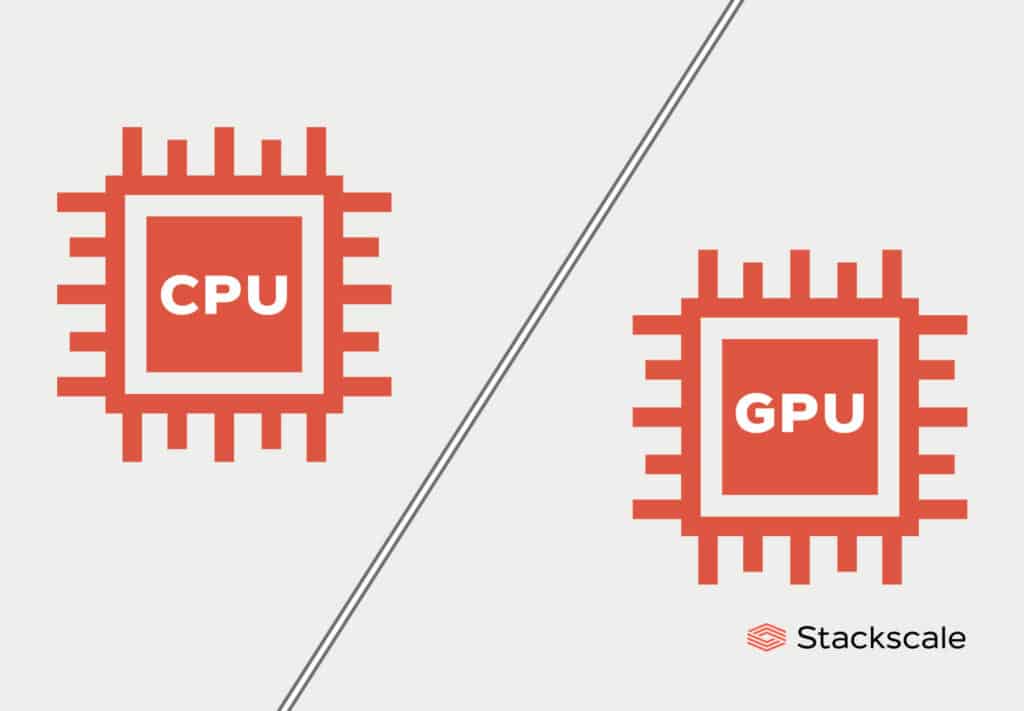
Comparison of CPU and GPU

CPU and GPU: features, differences and use cases

Both the CPU and GPU are processors intended to process and execute diverse types of instructions and tasks. Even though they serve different purposes and offer different benefits, both of them are an important part of high-performance servers. They can indeed work together to deliver further processing power. One of the main differences is that

READ MORE
OSI model (Open Systems Interconnection model)

OSI model: layers & security attacks

The OSI model, short for Open Systems Interconnection model, is a 7-layer model that describes an architecture of data communications in computer networking. The OSI reference model was developed in the late 1970s. However, due to its late invention, it was not implemented and has only remained as a reference model. The current model implemented

READ MORE
What is Artificial Intelligence?

What is Artificial Intelligence (AI)? Definition and use cases

Artificial Intelligence (AI) is a scientific field focused on creating machines and computers able to think, learn and act in a human-like manner. AI is currently surrounded by a lot of hype and, although still at an early stage, its impact on society is already significant. So, as the industry matures, the number of products

READ MORE
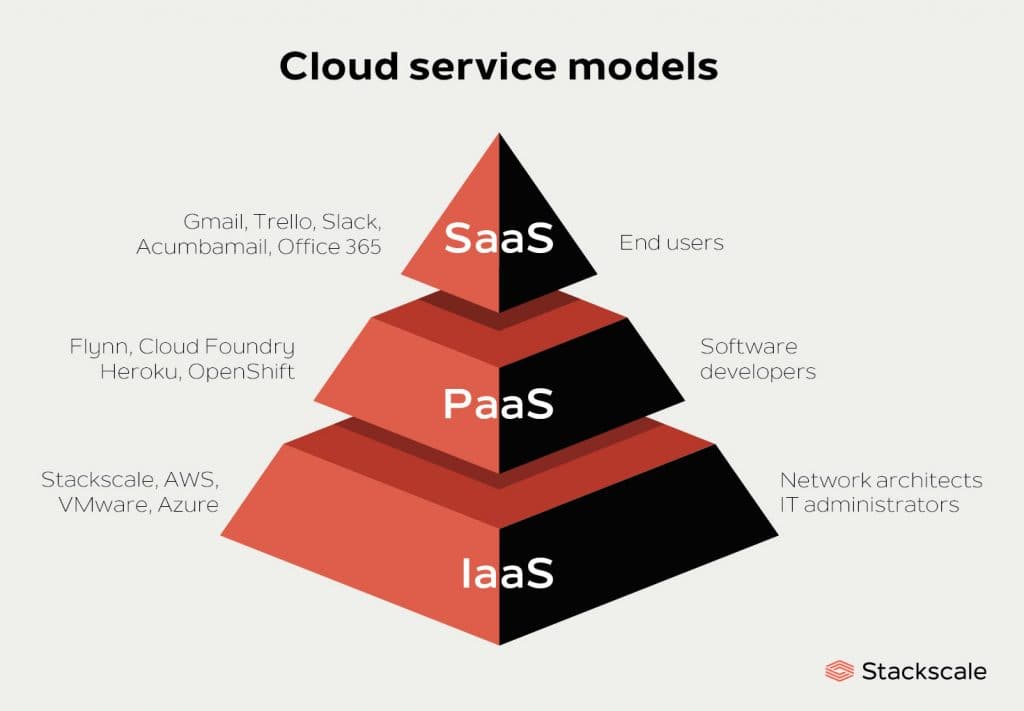
Cloud service models: SaaS, PaaS and IaaS

Main cloud service models: IaaS, PaaS and SaaS

The main three cloud service models are: IaaS, PaaS and SaaS. Each cloud service model covers different user and company needs, and provides a different level of control, security and scalability. IaaS is the cloud service model that offers a higher level of control compared with an on-premises solution. PaaS makes the process of developing

READ MORE
What is the IPv6 protocol

What is IPv6?

The Internet Protocol version 6 or IPv6 is a version of the Internet Protocol (IP). The Internet Protocol allows the transfer of data through a network to IP addresses (IPv4 or IPv6), which identify the different devices that are connected to the Internet, allowing communications among them. IPv6 should end up replacing IPv4. The transition

READ MORE
Edge computing

Edge computing & the exponential growth in data

Edge computing is a distributed computing architecture, key for those applications that need a really low latency, such as: self-driving cars, real-time image recognition or Augmented Reality (AR). This new paradigm originates in Content Distribution Networks (CDNs), created in the late 1990s to place content closer to end users as the Internet continued to grow

READ MORE
Intel Xeon Scalable processors

Intel® Xeon® Scalable processors: generations and features

Intel Xeon Scalable processors boost performance, efficiency, security and scalability. Since the beginning, the Intel® Xeon® Scalable processor family aims to provide the foundation for a powerful datacenter platform that boosts agility and scalability. They are designed for a wide variety of data center, edge and workstation workloads. 1st generation of Intel Xeon Scalable processors

READ MORE

Our expertise

Stackscale’s team is formed by experts who will help you anytime, 24/7.

Your Private Cloud

Grow and scale at your own pace with Stackscale’s dedicated cloud.

Cookies customization
Stackscale, Grupo Aire logo

By allowing cookies, you voluntarily agree to the processing of your data. This also includes, for a limited period of time, your consent in accordance with the Article 49 (1) (a) GDPR in regard to the processing of data outside the EEA, for instead, in the USA. In these countries, despite the careful selection and obligation of service providers, the European high level of data protection cannot be guaranteed.

In case of the data being transferred to the USA, there is, for instance, the risk of USA authorities processing that data for control and supervision purposes without having effective legal resources available or without being able to enforce all the rights of the interested party. You can revoke your consent at any moment.


Necessary Cookies

Necessary cookies help make a web page usable by activating basic functions such as the page navigation and the access to secure areas in the web page. The web page will not be able to work properly without these cookies. We inform you about the possibility to set up your browser in order to block or alert about these cookies, however, it is possible that certain areas of the web page do not work. These cookies do not store any personal data.

- moove_gdpr_popup


Analytical cookies

Analytical cookies allow its Editor to track and analyze the websites’ users behavior. The information collected through this type of cookie is used for measuring the activity on websites, applications or platforms, as well as for building user navigation profiles for said websites, application or platform, in order to implement improvements based on the analysis of data on the usage of the service by users.

Google Analytics: It registers a single identification used to generate statistical data about how the visitor uses the website. The data generated by the cookie about the usage of this website is generally transferred to a Google server in the USA and stored there by Google LLC, 1600 Amphitheatre Parkway Mountain View, CA 94043, USA.

- _dc_gtm_UA-XXXXXXXX-X

- _gat_gtag_UA_XXXXXXXX_X

- _ga

- _gcl_au

- _gid